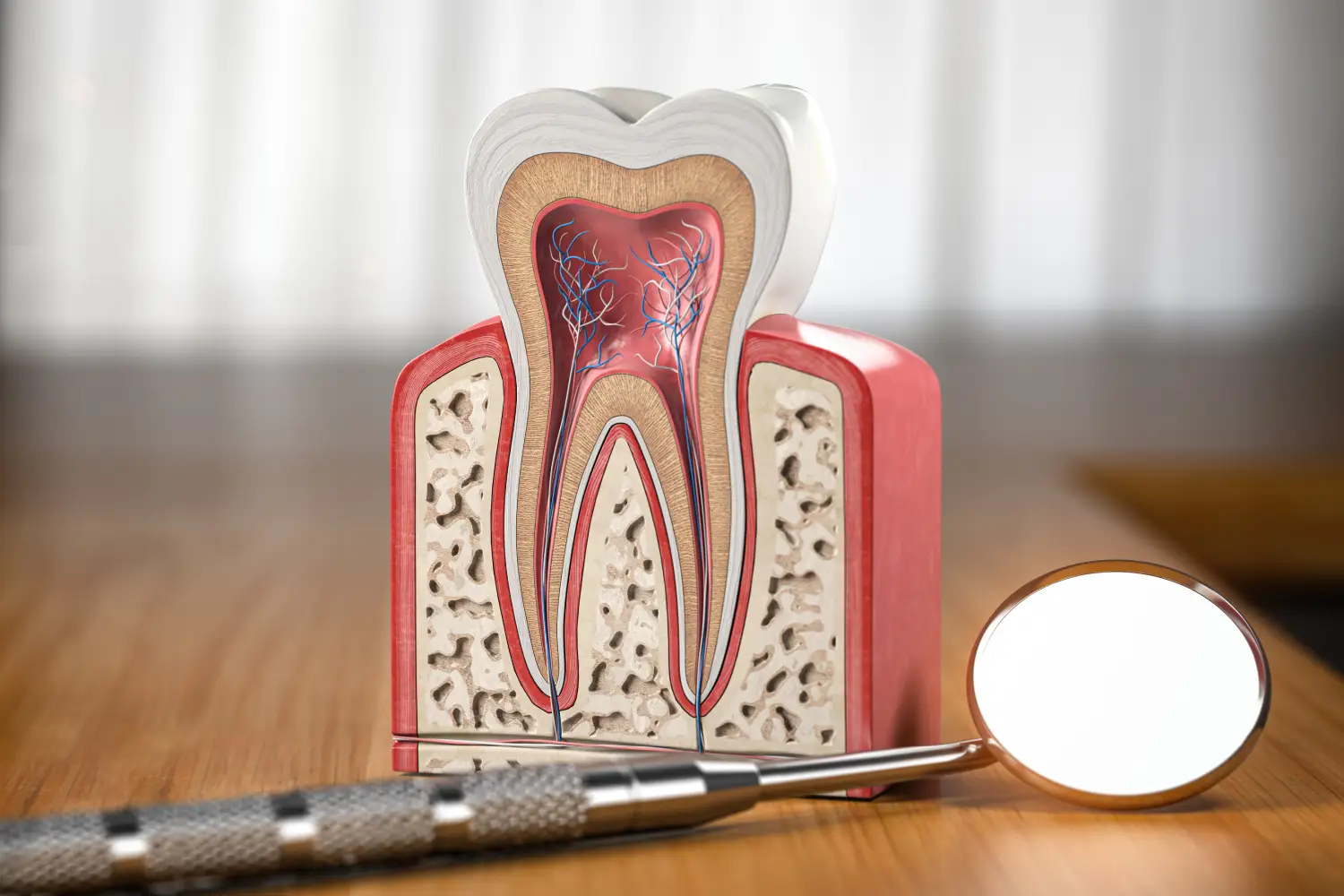

If you told someone ten years ago that plastic could be sitting quietly inside the human mouth, they’d probably laugh. Yet here we are. Microplastics are tiny, invisible particles from bottles, packaging, and even clothing. They have made their way into our air, our water, and now, our saliva.
At DJ College of Dental Sciences & Research, this subject has become a fascinating and slightly worrying area of study for us. We’re among the few BDS colleges in Delhi NCR looking at how these microplastics might affect oral tissues and dental implants. And honestly, what we’re learning is both surprising and a little humbling.
Table of Contents
ToggleHow Do Microplastics Even Reach the Mouth?
It starts with the environment. Every sip from a plastic bottle, every bite of food wrapped in plastic, every breath of polluted air — each introduces microscopic fragments into our bodies. Once inside, these particles can settle on oral surfaces. Saliva, which is meant to protect the mouth, seems to capture them like a sticky net.
In our labs, we’ve been examining samples under microscopes, and what we see makes us stop and think. The mouth is supposed to be one of the body’s cleanest systems, constantly washing itself. But when we find traces of microplastics clinging to soft tissue, it changes how we look at oral defense.
This is why dental colleges in Delhi NCR like ours are shifting research priorities. Dentistry is no longer just about enamel or cavities — it’s about understanding how the body interacts with a changing planet.
Can Microplastics Interfere with Dental Implants?
That’s the question we keep asking. Dental implants are designed to become one with the jawbone. But if microplastics are floating around saliva, could they settle on an implant’s surface before healing is complete? Some studies suggest yes.
At DJ Dental, we’ve started small pilot projects exploring this. Our postgraduates are looking at how bacterial biofilms and plastic particles may interact on titanium surfaces. It’s still early, but the images are eye-opening. Some particles stick to metal in ways we didn’t expect.
We’re not saying every implant is in danger — far from it. But as one of the most research-driven BDS colleges in Delhi NCR, we believe it’s our job to keep asking the questions that no one’s thought to ask yet.
What Can Future Dentists Learn From All This?
Curiosity. That’s the biggest lesson. When students walk into our clinics, they don’t just learn to clean, restore, or extract — they learn to observe. The idea that a global pollutant can appear in a patient’s saliva changes how young dentists think about prevention and diagnosis.
As educators, we tell our students that being part of the best dental colleges in Delhi NCR comes with responsibility. They’re not just treating patients; they’re studying patterns of life. Every case, every mouth, every implant tells a bigger story about the world we live in.
Are Microplastics a Real Threat or Just a Trend in Research?
It’s hard to say yet, and that’s what makes this topic so intriguing. Microplastics are new to dentistry, and no one has all the answers. But what’s clear is that these tiny fragments do interact with our bodies — sometimes silently.
We’ve seen reports of mild inflammation around implant tissues that couldn’t be explained by infection or trauma. Could microplastic exposure be one of the hidden factors? We don’t know yet, but the question is worth investigating.
At DJ Dental, we often remind ourselves that research doesn’t start with answers. It starts with curiosity and patience — the same values that make our graduates some of the most observant clinicians among dental colleges in Delhi NCR.
Why Is This Research Important for Students and the Future of Dentistry?
Dentistry isn’t just about drills and fillings anymore. It’s about understanding how the environment influences health. Microplastics are a perfect example — they blur the line between medicine, ecology, and materials science.
Our students at DJ Dental work in labs where science feels alive. They don’t just memorize reactions; they watch them happen. They collect saliva samples, study implant coatings, and see firsthand how something invisible can make a visible difference.
We tell them that being a good dentist today means being aware — of patients, of materials, and of the world itself. That’s what defines leading BDS colleges in Delhi NCR in this new era.
Could This Change How We Think About Oral Health Altogether?
Maybe it already has. The discovery of microplastics in saliva and implants forces us to look at the mouth differently. It’s not just a mechanical system; it’s a mirror reflecting what’s happening in the world outside.
At DJ Dental, we’re proud that our students see this bigger picture. They’re learning that every innovation — from biodegradable sutures to eco-friendly dental composites — is connected to this story. The goal isn’t to panic people about plastics, but to teach dentists to adapt to new realities.
What Comes Next in Our Research Journey
We’re setting up collaborative projects with environmental scientists and material engineers. Our vision is to test implant coatings that resist microplastic adhesion and explore saliva as a diagnostic tool for environmental exposure. It’s ambitious, but that’s what makes it exciting.
Being part of one of the most dynamic dental colleges in Delhi NCR, we see it as our duty to lead with both science and conscience. After all, the mouth is the body’s front door — and it deserves every bit of our attention.